Why Commercial Lawns Struggle Even With Regular Mowing in Southwest Missouri
At AmeriLawn, we've spent decades helping commercial property owners, HOA boards, apartment communities, retail centers, and facility managers improve lawn health across Southwest Missouri. One of the biggest misconceptions we encounter is the belief that if a lawn is being mowed regularly, it should automatically stay healthy.
Unfortunately, that isn't how commercial turf works.
We regularly evaluate commercial properties throughout Springfield, Ozark, Nixa, Republic, Rogersville, South Springfield, and the Branson area where mowing is being performed consistently, yet the turf continues to struggle with recurring weeds, thinning grass, bare spots, poor color, and declining curb appeal.
In many cases, mowing isn't the problem. The issue is that mowing is the only service being performed.
Healthy commercial turf depends on much more than grass height. Fertility, weed pressure, soil conditions, traffic stress, irrigation performance, insect activity, and Southwest Missouri's unique growing conditions all play a major role in how a lawn performs throughout the year.
Understanding these factors can help property managers make smarter decisions, improve property appearance, protect property value, and avoid costly renovation projects later.
Quick Answer: Why Commercial Lawns Struggle Despite Regular Mowing
Commercial lawns often struggle because mowing only controls grass height. Healthy turf depends on proper fertilization, commercial weed control, irrigation management, soil health, insect prevention, disease management, and ongoing monitoring. When mowing is the only service being performed, underlying issues continue developing until they become visible through weeds, bare spots, thinning turf, and declining curb appeal.
Why Is My Commercial Lawn Struggling Even With Regular Mowing?
Most commercial lawns struggle despite regular mowing because mowing only controls grass height. Issues such as nutrient deficiencies, weed competition, soil compaction, disease pressure, irrigation problems, insect activity, and seasonal stress must also be addressed to maintain healthy turf. When we evaluate struggling commercial properties, we almost always find one or more of these underlying factors contributing to the problem.
What Mowing Actually Does for a Commercial Lawn
Mowing Controls Height, Not Lawn Health
Regular mowing is an important part of maintaining a commercial property. It creates a cleaner appearance, improves visibility, and helps maintain a professional image for tenants, customers, visitors, and residents.
However, mowing only addresses one piece of the puzzle.
A mower can make a lawn look maintained, but it cannot solve problems happening beneath the surface. Nutrient deficiencies, soil compaction, weed pressure, insect activity, disease development, and root health all influence how a lawn performs long term.
A healthy lawn isn't created by cutting grass shorter. It's created by improving the conditions that allow turf to thrive.
Why Healthy Grass Requires More Than Cutting
Think of mowing as routine maintenance.
Just as changing the oil doesn't solve every vehicle issue, mowing doesn't address every turf issue. Commercial properties that consistently look green, dense, and healthy are usually benefiting from a combination of mowing, fertilization, weed control, soil management, and ongoing monitoring.
This is why two commercial properties can have identical mowing schedules but dramatically different results.
For property managers and HOA boards, this distinction matters. A lawn that looks acceptable immediately after mowing may still be declining beneath the surface. By the time weeds spread or large bare areas appear, the underlying issue has often been developing for months.
Why Commercial Lawns Decline Despite Regular Mowing
Nutrient Deficiencies
Commercial turf removes nutrients from the soil every growing season. Without replenishing those nutrients, grass often becomes weaker and less capable of competing with environmental stress.
Property managers frequently notice fading color, reduced density, and slower recovery after periods of heat or drought.
When we evaluate struggling commercial sites in communities like Republic and Ozark, nutrient deficiencies are often one of the first issues we identify.
For many properties, a professional lawn treatment program can help restore the nutrients turf needs to remain healthy and competitive.
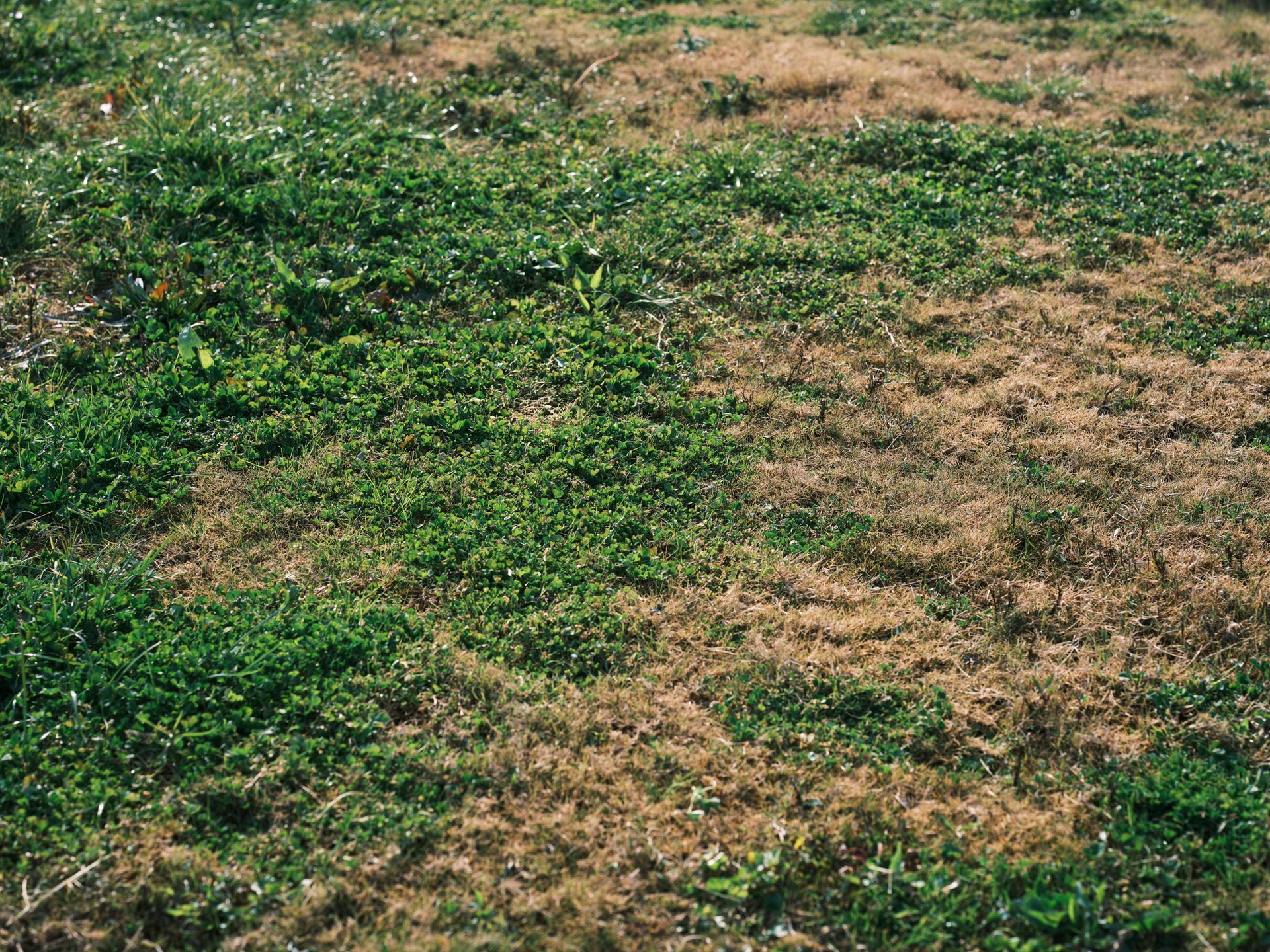
Weed Competition
Mowing may remove the visible top of a weed, but it rarely eliminates the problem.
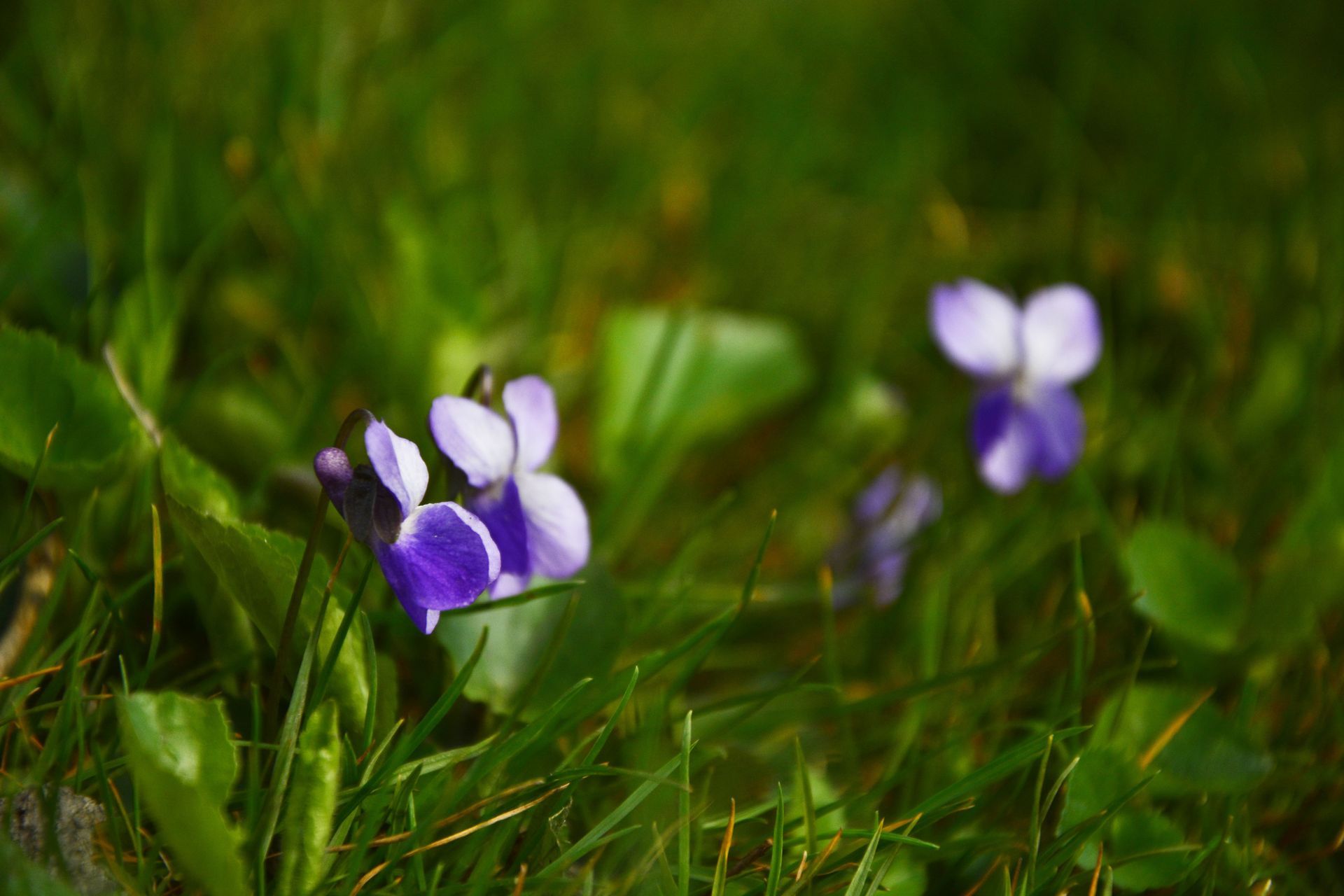
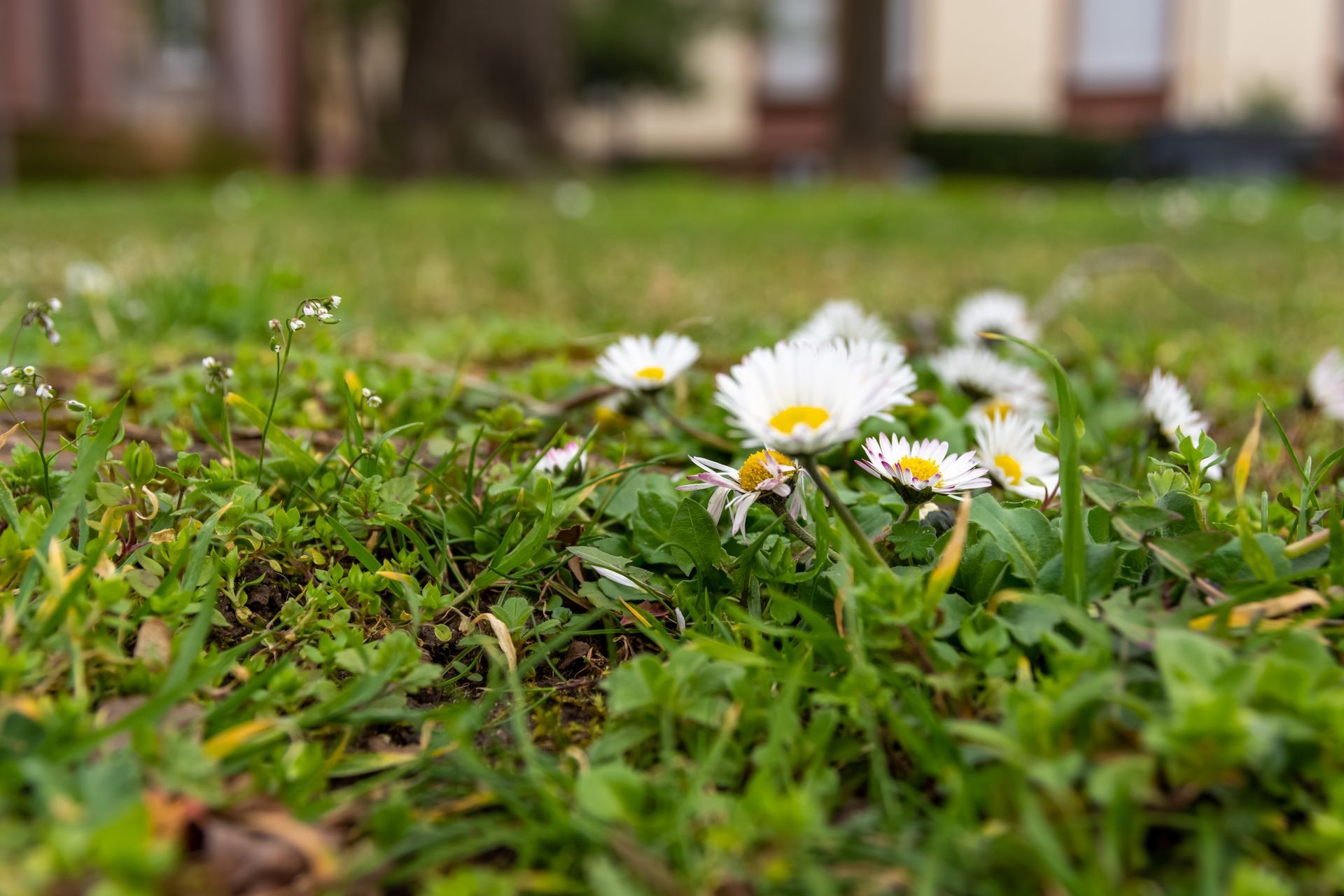
Many weeds commonly found throughout Southwest Missouri continue spreading below the surface even when they're being cut regularly.
| Common Weed | Impact on Commercial Turf |
|---|---|
| Crabgrass | Crowds out desirable turf |
| Clover | Competes for nutrients |
| Henbit | Creates seasonal infestations |
| Broadleaf Weeds | Reduces uniform appearance |
| Nutsedge | Spreads aggressively in stressed turf |
As weeds become more established, they compete directly with healthy grass for water, nutrients, and sunlight.
This is why commercial weed control programs are such an important part of commercial turf management. If recurring weeds are affecting your property, our weed control services are designed to address both existing infestations and future weed pressure.
Soil Compaction
One of the most overlooked issues on commercial properties is soil compaction.
Apartment communities, office parks, retail centers, and HOA common areas experience significantly more traffic than residential lawns.
Over time, that pressure compresses the soil and limits the movement of water, oxygen, and nutrients.
When roots can't access what they need, turf performance suffers.
One issue we frequently see on commercial sites is turf that receives regular mowing but has never received meaningful attention to soil health. The result is often a lawn that struggles year after year despite looking maintained on the surface.
Insect and Grub Damage
Many lawn issues begin below the surface.
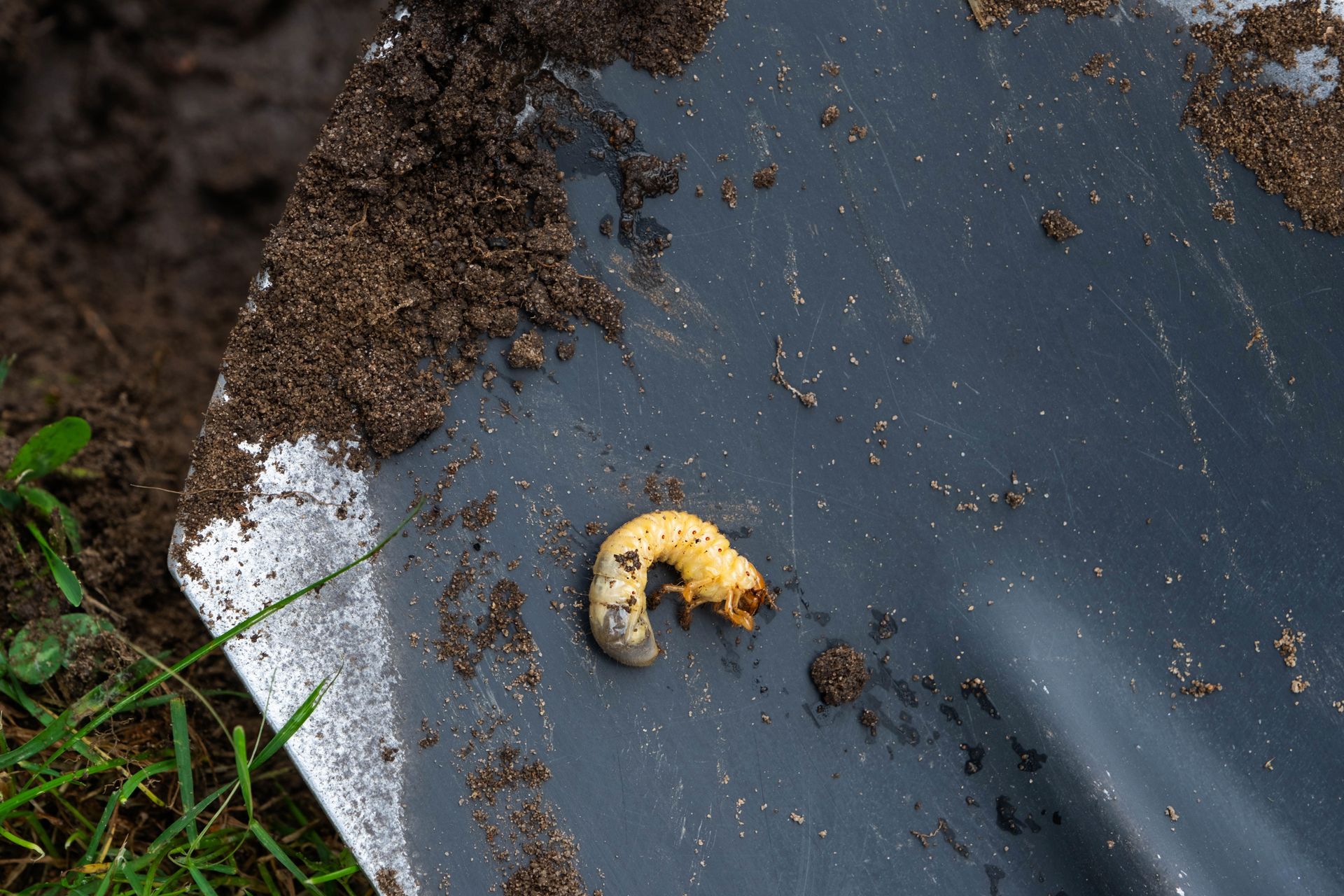
Grubs feed on turf roots, weakening the lawn and creating areas that become vulnerable to drought stress and weed invasion.
When we inspect commercial properties throughout Nixa and surrounding communities, we occasionally find that what appears to be a mowing issue is actually insect damage that has been developing unnoticed.
Properties experiencing recurring turf loss may also benefit from professional grub control services designed to protect root systems before widespread damage occurs. You can also learn more in our article, Signs Your Lawn Has Grubs and What to Do About It in Missouri.
Disease Pressure
Disease is another issue that mowing alone cannot solve.
Southwest Missouri's heat and humidity create ideal conditions for common turf diseases such as Brown Patch and Large Patch.
- Large brown circles in turf
- Rapid thinning
- Weak or dying grass
- Uneven appearance across commercial sites
Property managers often assume these areas are related to irrigation or mowing when disease pressure is actually contributing to the decline.
Irrigation Problems
Another common issue we encounter involves irrigation performance.
Even a well-designed lawn treatment program can struggle when irrigation systems are not functioning properly.
- Broken sprinkler heads
- Uneven coverage
- Overwatering
- Underwatering
- Improper watering schedules
Commercial properties often experience multiple irrigation issues simultaneously, which can create inconsistent turf quality across the site.
Turf Stress From Missouri Weather
Commercial lawns throughout Southwest Missouri are exposed to some challenging growing conditions.
Summer heat, humidity, inconsistent rainfall, and temperature swings all place stress on turf.
Without proper nutrition and management, grass becomes more vulnerable to weed invasion, disease pressure, root decline, and drought stress.
A lawn treatment program helps strengthen turf so it can better withstand these seasonal challenges. Property owners looking for a deeper understanding of treatment effectiveness may also find value in our article, Why Some Lawn Treatments Work Better Than Others in Missouri.
Why Southwest Missouri Commercial Turf Faces Unique Challenges
The Ozarks Sit in the Turfgrass Transition Zone
One challenge many property owners don't realize is that Southwest Missouri sits within what's known as the Transition Zone.
This region experiences summers that are often too hot for cool-season grasses to thrive comfortably, while winters can be too cold for many warm-season grasses to remain active year-round.
As a result, turf is often under stress before weeds, insects, or disease ever become a factor.
Tall Fescue Struggles During Missouri Summers
Tall fescue is one of the most common turf varieties found throughout Springfield, Rogersville, and surrounding communities.
While it performs well during spring and fall, it naturally struggles during extended periods of summer heat.
- Increased thinning
- Brown patches
- Slower recovery
- Greater weed pressure
Many assume the lawn simply needs more mowing when the real issue is environmental stress combined with nutrient deficiencies, soil compaction, or inadequate treatment programs.
The University of Missouri Extension provides extensive research on proper turf management practices for Missouri's climate and growing conditions.
Mowing Too Short Can Increase Stress
One issue we commonly see is mowing heights that are too aggressive during the hottest months of the year.
- Root systems become weaker
- Soil dries out faster
- Heat stress increases
- Weed pressure often increases
Maintaining appropriate mowing heights can significantly improve turf performance during the summer months.
Wet Turf Creates Additional Problems
Spring and early summer often bring periods of heavy rainfall across Southwest Missouri.
When commercial properties are mowed on saturated turf, it can contribute to soil compaction, rutting, damaged grass crowns, and additional stress on already struggling turf.
This is another reason why mowing alone cannot solve larger turf management challenges.
Clay Soils Create Long-Term Challenges
Much of the Ozarks is characterized by clay-heavy soils mixed with limestone and chert.
| Soil Condition | Potential Turf Problem |
|---|---|
| Heavy Clay | Poor drainage |
| Compaction | Restricted root growth |
| Shallow Soil Profiles | Limited moisture retention |
| Rocky Subsoil | Root development challenges |
Without proactive lawn care, these conditions can limit turf performance year after year.
Commercial Traffic Accelerates Turf Decline
Unlike residential lawns, commercial properties experience constant pressure from customers, tenants, delivery vehicles, service contractors, and maintenance equipment.
Every season that traffic contributes additional compaction and stress to the lawn.
When managed landscapes rely solely on mowing, those challenges continue accumulating.
What Separates Commercial Lawn Care From Commercial Mowing
What Most Mowing Companies Focus On
Most mowing providers focus on appearance-related services:
- Cutting grass
- Trimming
- Edging
- Cleanup
These services are important and necessary.
However, they are not designed to improve overall turf health.
What Comprehensive Commercial Lawn Care Includes
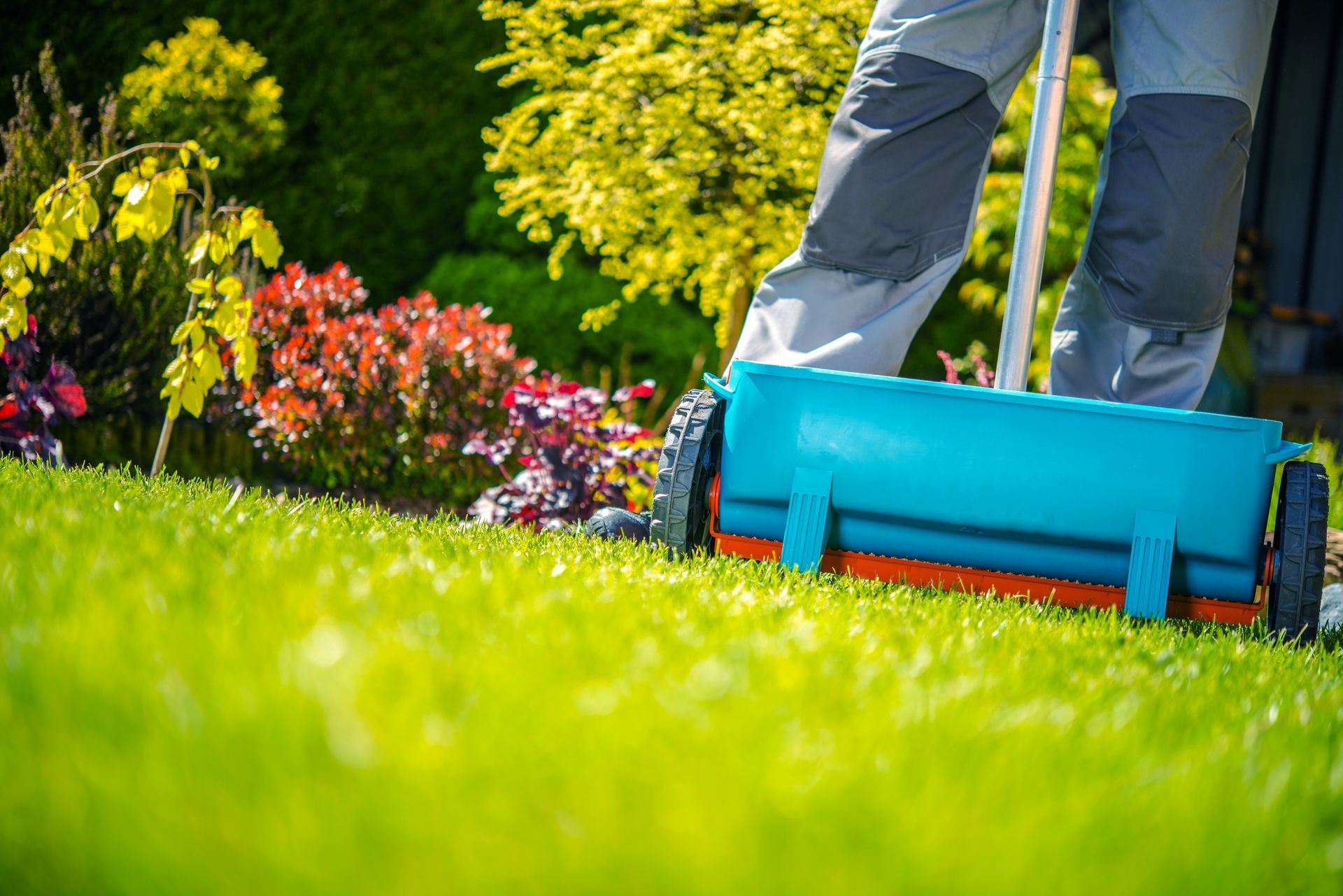
A complete commercial lawn care program focuses on the long-term health of the property.
Weed Control
Preventing weeds from overtaking desirable turf.
Fertilization
Providing nutrients needed for growth and recovery.
Grub Prevention
Protecting roots from insect damage.
Disease Monitoring
Identifying issues before they spread.
Seasonal Treatments
Addressing changing conditions throughout the year.
Property Evaluations
Monitoring performance and making adjustments.
These services address the causes of lawn decline rather than simply managing the symptoms.
Comprehensive commercial lawn care programs are most effective when paired with customized treatment schedules designed specifically for the property rather than generic applications.
What Separates Effective Commercial Lawn Care From National Lawn Programs
One reason commercial property managers choose local providers is the level of communication and customization they receive.
- Inconsistent communication
- Missed applications
- Generic treatment programs
- Limited responsiveness
Effective property management lawn care requires more than simply following a schedule.
It requires understanding local soils, local turf varieties, local weather patterns, and the specific challenges affecting each property.
Over the years, we've evaluated and treated turf for apartment communities, HOA-managed properties, hospitality facilities, commercial sites, and business campuses throughout Southwest Missouri. While every property is different, the underlying causes of turf decline are often remarkably similar.
When Turf Rehabilitation Becomes Necessary
Signs a Property May Need Rehabilitation
Sometimes a lawn reaches a point where routine maintenance is no longer enough.
- Chronic bare spots
- Significant thinning
- Persistent weed infestations
- Areas that never recover
- Turf decline year after year
What Turf Rehabilitation Actually Involves
Turf rehabilitation focuses on restoring damaged lawn areas rather than simply masking the symptoms.
- Aeration
- Overseeding
- Soil improvement
- Targeted weed control
- Renovation work
The goal is to rebuild healthy turf from the ground up.
Properties experiencing widespread decline may benefit from turf rehabilitation services that address the root causes of the problem rather than temporarily improving appearance. For additional insight, see our article, What Does Lawn Renovation Actually Fix? Signs Your Yard Needs More Than Fertilizer.
Why Waiting Usually Makes Problems More Expensive
One of the most common mistakes we see is waiting too long to address declining turf.
Small issues often become larger renovation projects when left unchecked.
Early intervention typically produces better results and lower long-term costs.
How Property Managers Can Evaluate Their Lawn Program
Questions Worth Asking
| Question | Why It Matters |
|---|---|
| Is fertilization included? | Supports turf health |
| Are weeds being monitored? | Prevents larger infestations |
| Are recommendations documented? | Improves accountability |
| Is lawn health improving annually? | Measures results |
| Is someone evaluating the property regularly? | Identifies issues early |
Red Flags That Your Property Is Only Receiving Mowing
A lawn may need more than mowing if weed pressure continues increasing, bare spots never improve, turf density keeps declining, recommendations are rarely provided, or lawn health conversations never occur.
The USDA Natural Resources Conservation Service identifies soil health and compaction as major factors affecting plant performance, making regular evaluations especially important on commercial sites.
Commercial Lawn Health Checklist for Property Managers
Use this quick checklist to evaluate whether your current lawn program is supporting long-term success.
- Turf density is improving each year
- Weeds are decreasing rather than increasing
- Fertilization is part of the maintenance plan
- Irrigation performance is monitored regularly
- Problem areas are documented and addressed
- Seasonal treatments are being applied
- Recommendations are provided proactively
- Property appearance continues improving year after year
If several of these boxes remain unchecked, it may be time to evaluate whether your current program is focused on lawn health or simply mowing.
Frequently Asked Questions
Why does my commercial lawn have weeds even though it is mowed every week?
Mowing controls grass height but does not eliminate weeds. Most weeds require targeted treatment programs to prevent them from competing with healthy turf.
Can mowing alone keep a commercial lawn healthy?
No. Healthy turf typically requires fertilization, commercial weed control, soil management, irrigation monitoring, and ongoing treatment in addition to regular mowing.
What causes bare spots in commercial lawns?
Bare spots can result from soil compaction, grub activity, drought stress, irrigation problems, disease pressure, heavy traffic, or nutrient deficiencies.
Is fertilization necessary for commercial properties?
In most cases, yes. Fertilization helps provide the nutrients turf needs to maintain density, color, and overall health.
What is turf rehabilitation?
Turf rehabilitation is the process of restoring damaged lawn areas through practices such as overseeding, aeration, soil improvement, and targeted treatment programs.
Looking Beyond Mowing for Better Long-Term Results
If a commercial lawn continues to struggle despite regular mowing, the problem is often deeper than grass height.
Weed pressure, soil conditions, nutrient deficiencies, insect activity, disease pressure, irrigation performance, environmental stress, and Southwest Missouri's growing conditions all influence how a property performs throughout the year.
For property managers, HOA boards, apartment communities, and business owners throughout Springfield, Republic, Ozark, Nixa, Rogersville, Branson, and surrounding communities, understanding these factors can help prevent recurring problems, improve curb appeal, reduce complaints, and protect long-term property value.
If you're evaluating your current landscape program and want to better understand what's causing thinning turf, recurring weeds, or declining appearance, we're happy to help. A commercial lawn evaluation allows us to identify issues such as compaction, weed pressure, nutrient deficiencies, irrigation concerns, disease activity, and turf stress before recommending a customized plan for your property.
Our team combines decades of local experience, licensed Missouri applicators, and customized treatment strategies designed specifically for the conditions we see every day across Southwest Missouri.
To schedule a commercial lawn evaluation or request a free estimate, visit request a free estimate and speak with our team.