What Are the Purple Weeds in My Lawn? Common Missouri Lawn Weeds Explained
If your lawn has a purple tint showing up this spring, you’re seeing one of the most common lawn issues in Missouri.
By the time that color becomes noticeable, those weeds have already been growing for weeks beneath the surface. We see this every year when evaluating lawns in Springfield, and the same pattern shows up in nearby areas like Ozark and Nixa where early-season growth starts before most people begin lawn care.
At AmeriLawn, identifying these weeds is something we do every day. With licensed applicators and decades of experience working with Missouri soil and seasonal conditions, we can usually tell not just what the weed is, but why it showed up in the first place.
That distinction matters. Because this is not just about removing weeds. It is about correcting the conditions that allowed them to grow.
What Are the Purple Weeds in My Lawn?
The most common purple weeds found in Missouri lawns are henbit, purple deadnettle, and wild violet.
These are winter annual weeds, meaning they begin growing during cooler months and become visible in early spring.
According to the University of Missouri Extension, these weeds thrive in thin or stressed turf where grass is not dense enough to compete.
If you are seeing them now, they have already taken hold. That is why they tend to spread quickly and return each year without proper prevention.
Most Common Purple Weeds Found in Missouri Lawns
Henbit (The Most Common Culprit)
Henbit is responsible for that light purple look across many lawns.
- Small purple flowers
- Rounded leaves that wrap around the stem
- Rapid spread in early spring
We commonly find this in lawns that missed early-season protection, especially when evaluating properties in Republic where turf density is inconsistent.
Purple Deadnettle
Purple deadnettle looks similar but grows slightly differently.
- Pointed leaves
- Upper leaves turn darker purple
- Grows more upright
It tends to show up alongside henbit and is often mistaken for the same plant. In neighborhoods around Rogersville, we often see both growing together in thinner areas of turf.
Wild Violet (The Hardest to Control)
Wild violet is one of the more difficult weeds to eliminate.
- Heart-shaped leaves
- Deep root system
- Persistent regrowth
We often see this become a long-term issue in older lawns, especially in areas like Branson where soil conditions and shade can make control more challenging.
Other Purple Weeds You May Notice
Some lawns may also show:
- Creeping Charlie
- Red clover
While less aggressive, they point to the same underlying issue. The lawn is not strong enough to prevent weed growth.
Why Purple Weeds Are Taking Over Your Lawn
These weeds are not random. They appear when conditions allow them to.
Weak or Thin Turf
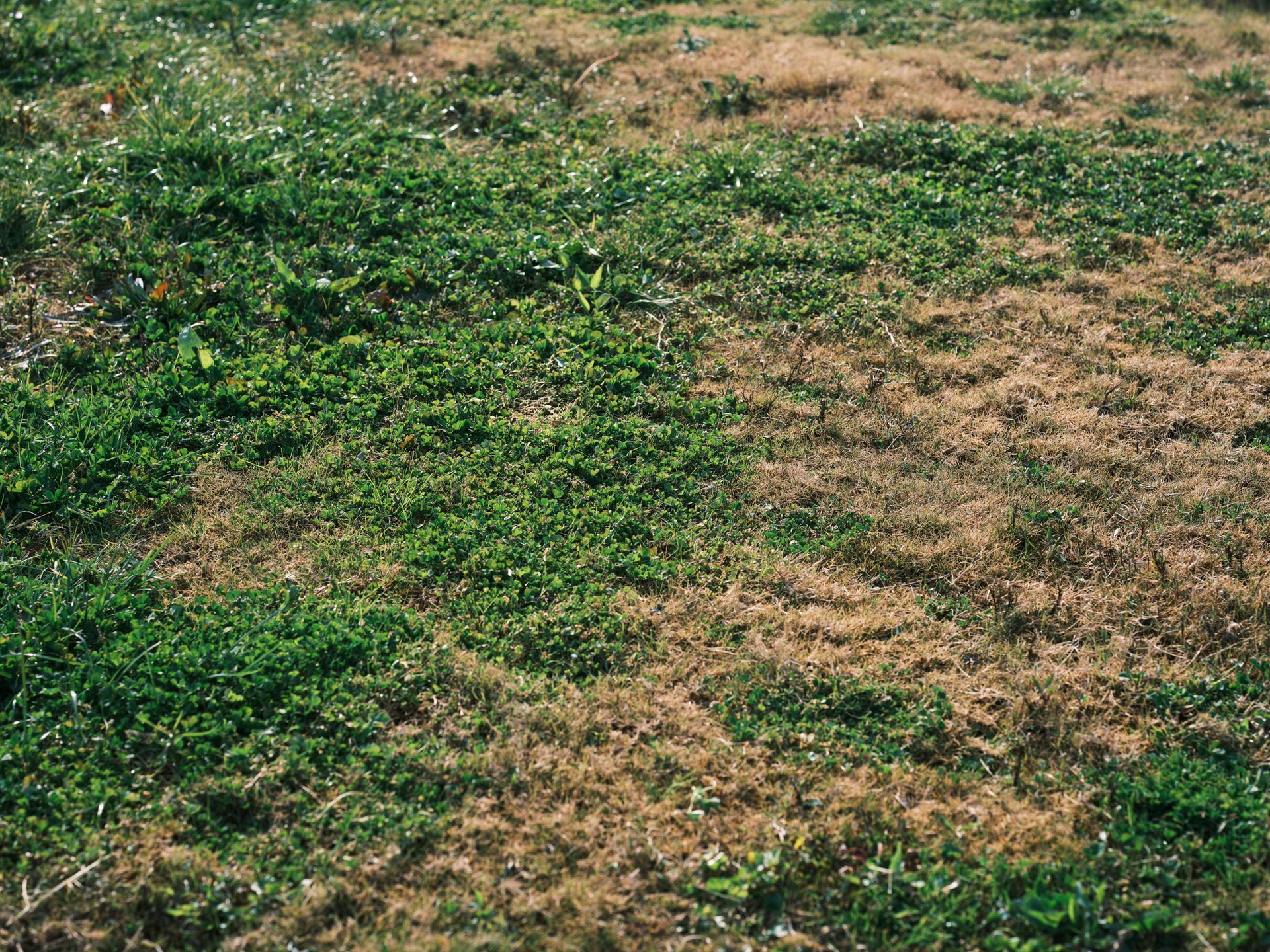
A dense lawn naturally blocks weeds. When grass thins out, weeds take advantage of open space.
This is why consistent lawn treatment and fertilization is critical for long-term results. We often see stronger results in maintained lawns in Nixa where consistent programs are already in place.
Missed Pre-Emergent Timing
Most homeowners begin lawn care after weeds are visible.
The problem is that these weeds start growing weeks earlier. This is a common issue we see when reviewing properties in Springfield where early-season applications were delayed.
Ineffective or Inconsistent Treatments
Many over-the-counter products only treat surface growth and do not stop future cycles.
We often see this pattern repeated in lawns near Strafford where treatments were applied inconsistently from year to year.
Missouri Climate Conditions
Cool soil and early moisture create ideal conditions for winter annual weeds.
The University of Illinois Extension explains that these weeds must be prevented before they emerge to stop the cycle.
When Purple Weeds Appear and Why Timing Matters
Purple weeds begin growing in late winter.
By the time they are visible:
- They are already established
- They have spread
- Prevention is no longer possible for that season
This is why proper timing is one of the most important parts of weed control. We often explain this to homeowners in Ozark who are seeing weeds for the first time and wondering why they appeared so quickly.
How to Get Rid of Purple Weeds in Your Lawn
Effective control requires more than one step.
Post-Emergent Weed Control
Targets visible weeds and improves appearance quickly.
Pre-Emergent Applications
Prevents weeds before they grow.
This is the most important part of long-term control.
Lawn Health and Fertilization
A stronger lawn reduces the chance of weeds returning.
Ongoing weed control and fertilization services help build that strength over time. This is especially noticeable in lawns we maintain in areas like Willard where turf density improves season after season.
Why Professional Treatment Plans Work Better
Every lawn is different.
We build treatment plans based on real conditions we see on your property. That includes soil, sunlight, and past weed activity.
This is how we help homeowners move beyond temporary fixes and start seeing consistent results.
Can You Prevent Purple Weeds from Coming Back?
Yes, but only with consistency.
What Actually Works
- Proper seasonal timing
- Consistent applications
- Strong turf development
What Most Homeowners Get Wrong
- Waiting too long
- Skipping treatments
- Treating symptoms instead of causes
Prevention starts before the weeds are visible, which is something many homeowners realize after dealing with repeat issues from one season to the next.
When to Call a Professional for Weed Control
You may need professional help if:
- Weeds return every year
- The lawn is thin or uneven
- DIY treatments have not worked
We often hear from homeowners in areas like Nixa and Rogersville who have tried multiple approaches but never addressed the timing or underlying cause.
How AmeriLawn Solves Purple Weed Problems in Missouri Lawns
We focus on correcting the cause, not just the symptoms.
Local Experience That Matters
We have worked with Missouri lawns for over 25 years. That experience allows us to identify patterns and prevent issues before they repeat, whether we are working on a property in Springfield or a lawn just outside Branson.
Customized Lawn Treatment Plans
Every property receives a plan based on its specific conditions.
Consistent and Reliable Service
You get clear communication, dependable scheduling, and results that improve over time.
Frequently Asked Questions
Why do purple weeds come back every year?
Because they begin growing before most treatments are applied. Without prevention, the cycle continues.
Will mowing remove them?
No. Mowing only removes visible growth and does not affect the root system.
Do these weeds eventually go away?
Some fade with warmer weather, but the underlying issue remains and they will return.